


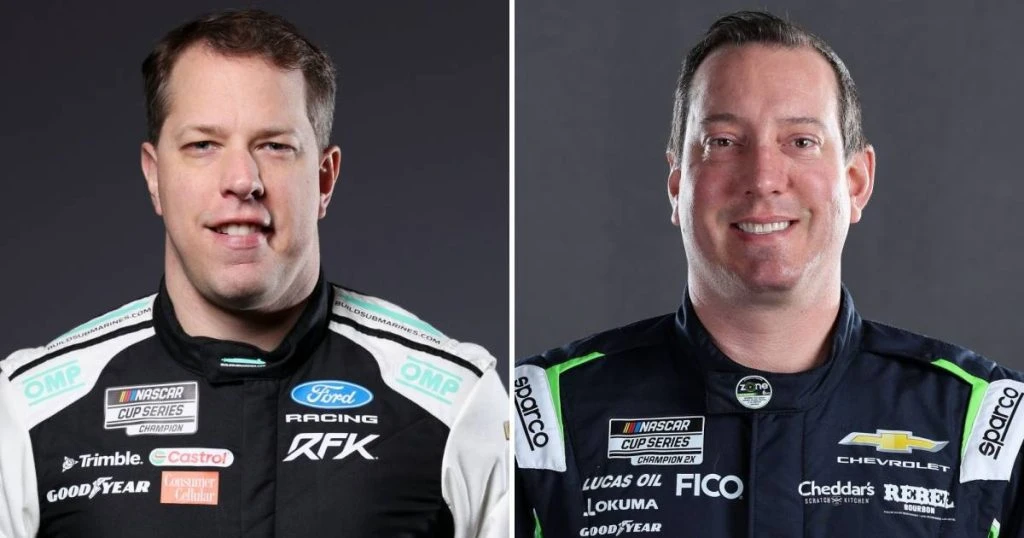
The NASCAR world reeled after Kyle Busch died at age 41 on Thursday, May 21, following a sudden hospitalization for a severe illness. For Keselowski, 42, the shock was compounded by a complicated truth—they were rivals, not friends. But that simple framing undersells what had built between them over decades of head-to-head racing. “I think there was a mutual respect,” Keselowski said, and in those few words lay the complicated legacy of two men who pushed each other to excellence precisely because they refused to give an inch.
The numbers tell part of the story. Busch won 234 NASCAR races—a record Keselowski doesn’t believe will ever be broken. He was a first-ballot Hall of Famer in waiting, a generational talent with an unmatched work ethic. But what made their rivalry sting was that Keselowski knew exactly what it took to beat him. “When you beat Kyle Busch, you know you beat one of the best,” he reflected. That’s not something you say about just anyone. There’s grudging pride baked into that statement—the kind of respect that only comes from real competition.
Their feud played out both on and off the track. In 2010, after Busch won a Nationwide Series race at Bristol following a tangle that sent Keselowski’s car into the wall, Keselowski called him “an ass.” Seven years later, Busch returned fire at the 2017 Championship 4 Media Day, saying simply that “sometimes you just don’t like a guy, fact of the matter.” These weren’t the words of men pretending to be civil. This was real friction, real stakes, real racing.
What makes Keselowski’s tribute sting is the hindsight it carries. In 2025, when both drivers had struggled to win consistently, Keselowski said he’d “love to rekindle that rivalry”—imagining a future where they’d be at each other’s throats again, competing for wins. That future never came. Busch was supposed to race this weekend at the Coca-Cola 600 at Charlotte Motor Speedway on Sunday, May 24. He hadn’t missed a race since an injury in 2015. He’d won as recently as the previous Friday. Then, in hours, he was gone.
In his extended statement, Keselowski stripped away the competitive veneer and revealed something deeper. “I made him earn every victory and stole a few from him along the way,” he wrote. “We took our shots at each other, in the media and on the track. But I’d like to think that somewhere deep down there was an appreciation that we pushed each other to perform at the highest level, even if neither of us would’ve admitted it.” It’s the kind of thing you only understand after it’s too late—that the person you’ve been fighting isn’t your enemy. They’re your mirror.
The racing will continue this weekend, as Keselowski noted. But the sport has lost more than a champion. It’s lost the kind of rival who makes everyone around him better. Keselowski ended his tribute thinking of Busch’s family—his wife Samantha and their two children, Brexton, 11, and Lennix, 4—left to navigate a world without him. “Tonight, I feel a little like the coyote with no more roadrunner to chase,” Keselowski wrote. In that image lies the whole story: sometimes you don’t know how much someone means until the chase is over.