

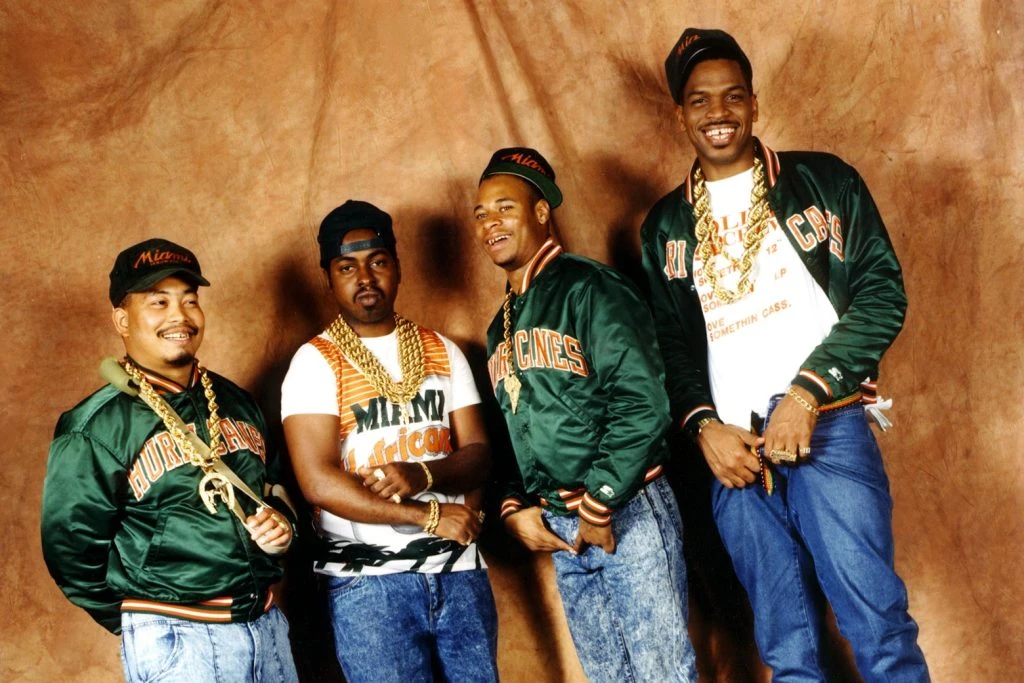
The group’s lead single, Me So Horny, was explicit enough to set off alarms from conservative watchdog organizations. Rev. Donald Wildmon, founder of the American Family Association, partnered with attorney Jack Thompson to convince Florida Governor Bob Martinez that the album was obscene. By June 1990, a federal judge had ruled that the album flunked the three-prong obscenity test established in Miller v. California, and the ban rippled across Florida and into counties across Ohio, Indiana, Tennessee, Alabama, Texas, Pennsylvania, and Wisconsin. Four days after the ruling, two band members were arrested following a performance in Hollywood, Florida, facing fines and up to a year in prison each.
What the prosecution didn’t anticipate was how the trial itself would undermine their case. When prosecutors played concert recordings, the audio quality was so abysmal that even the police officer who made the bootleg tape couldn’t describe what was actually on it. But when the state moved to play actual songs from As Nasty As They Wanna Be, something unexpected happened: the jurors couldn’t stop laughing. The courtroom became a scene of barely contained hilarity as jurors giggled during breaks and rolled their eyes throughout testimony. Judge June Johnson eventually had to rule that laughter was permitted during the trial—a decision that fundamentally shifted the energy of the proceedings.
The defense seized the moment by calling historian Henry Louis Gates Jr., who reframed 2 Live Crew’s work within the African American tradition of coded language and hyperbolic storytelling. Gates explained that the group’s exaggerated sexual imagery was designed to be read as parody and satire—a commentary on racist stereotypes about Black men rather than a celebration of the behavior itself. The jury didn’t need to be fluent in Black cultural codes to grasp what Gates was saying; they just needed to recognize absurdity when they heard it.
On October 20, 1990, the jury swiftly acquitted 2 Live Crew. What made the verdict truly remarkable was who became the strongest advocates for the First Amendment: the older women the defense had worried about. Beverly Resnick, age 65, told her fellow jurors that protecting freedom of speech was non-negotiable because if you take away one freedom, pretty soon they’re all gone.
The case marked a turning point. Luther Campbell, the group’s frontman known as Luke Skyywalker, had been selling albums out of his car trunk before the controversy. The arrest transformed him into a household name and caught the attention of Atlantic Records head Doug Morris, who signed the group and helped them record Banned in the U.S.A., a defiant response that sampled Bruce Springsteen’s Born in the U.S.A. What began as a legal threat became a publicity windfall—and a reminder that sometimes the best defense against censorship isn’t solemn argumentation. Sometimes it’s just laughing at the absurdity.