


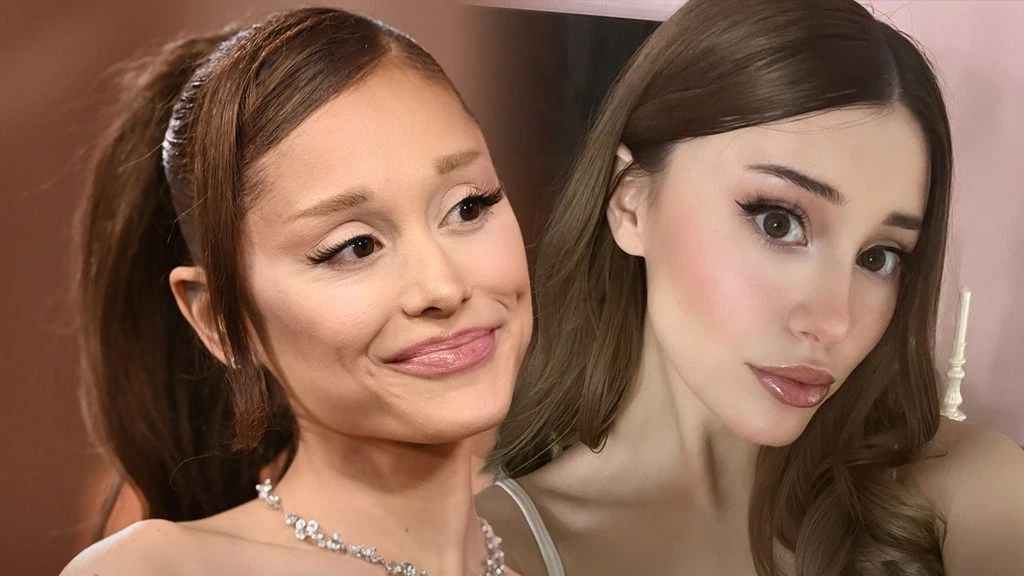
The Ariana Grande lookalike revealed in her documentary that the pop star herself once sent her a direct message. And it wasn’t a cease-and-desist or a compliment wrapped in legalese. Grande’s message struck a different chord entirely. “i am flattered and i am sure you’re very sweet,” Grande began, before pivoting to what sounded like genuine concern. “but i just wanted you to know, i looked back a little ways on your page and i think someone should tell you if they haven’t today that…”
The message cuts off there, leaving the rest to speculation. But the framing tells you everything: this wasn’t about the impersonation itself. Grande’s tone—lowercase, conversational, almost maternal—suggests she was addressing something deeper about Niemann’s content or online presence that bothered her enough to reach out privately rather than publicly call her out.
What makes this moment interesting isn’t the drama you might expect. It’s the restraint. In an era where celebrities weaponize their platforms and impersonators rake in millions doing dead-on impressions, Grande chose the oldest playbook in the book: a quiet, direct conversation. No subtweeting, no public shaming, no legal threats. Just person to person.
For Niemann, the decision to include this exchange in her documentary signals something too—a willingness to show the complicated reality behind the persona. She’s built a career on mimicking one of the world’s biggest pop stars, but this moment reveals there’s actual relationship texture there, even if it’s uncomfortable. It’s the kind of detail that turns a simple impersonation story into something more human.
The real takeaway? Sometimes what a celebrity doesn’t say publicly is just as revealing as what they do.